
NEWS
“Public Service Is A Mission, Not A Job”, Abia Govt Urges Ethics, Productivity

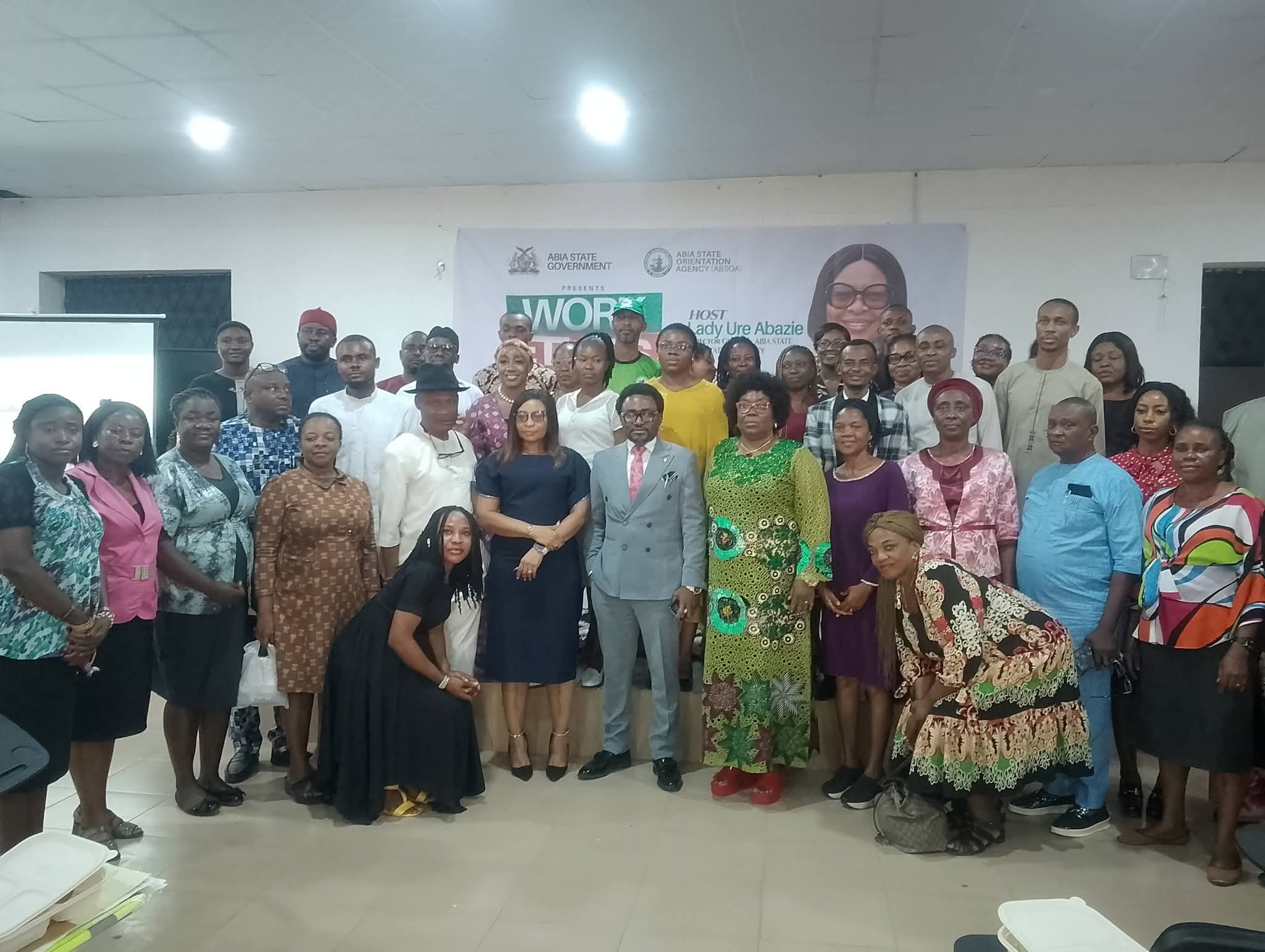
The Abia State Commissioner for Information, Prince Okey Kanu, has called on civil and public servants to embrace professionalism, integrity and productivity as the foundation of effective governance.
Kanu made the call on Wednesday in Umuahia at the opening of “Work Ethics 1.0”, a workshop organized by the Abia State Orientation Agency for Information Officers and media personnel.
Describing the civil service as more than an institution, the Commissioner said it is “a missionary troop” through which government translates policies and promises into tangible results for the people.
“Every file attended to, every citizen we serve, every decision we take and every public resource entrusted to us carries a responsibility to the people,” Kanu stated.
“Professionalism, integrity and productivity must not remain slogans in official documents. They must become the culture that defines our daily conduct.”
Kanu urged public servants to constantly self-assess their output, warning against lateness, early closure and poor attitude to work.
“Productivity challenges us to ask a simple but powerful question: What difference have I made today to the responsibility given to me? If you come to work late by 10 or 11 and close by 1pm because the Commissioner is not around, you will not give your best for that day,” he said.
He noted that the quality of governance is measured not by speeches, but by the services citizens receive daily “the way we speak, respond to inquiries, and the attitude with which we attend to people.”
“If you have a bad attitude and brush people aside, they may not say anything to your face. But they will tell others that government is not working. Do the right thing not because people are watching, but because it is the right thing to do,” he added.
The Commissioner, a former banker, shared personal experiences to drive home the point of discipline and commitment.
In her address, the Director General of the Abia State Orientation Agency, Lady Ure Abazie called on information officers and media personnel to uphold integrity, accountability and professionalism in public service, as it seeks to reshape government communication for the digital age.
Lady Abazie said the workshop was designed not just to discuss work, but to remind participants of the kind of professionals they must become in service to the people.
“Work ethics is more than a matter of culture. It is about how seriously we take our responsibility when nobody is watching. It is about integrity. It is about accountability. It is about respect for the people we serve,” she stated.
She stressed that civil servants are part of the machinery through which the government reaches the people, noting that every phone call answered, every piece of information released, and every assignment handled shapes public perception of the government.
“Sometimes the public may not know the name of the officer who gave them wrong information or ignored them. They simply conclude that the government is not working,” the DG said.
Lady Abazie urged information officers to adapt to the changing media landscape driven by Facebook, Instagram, TikTok, YouTube, WhatsApp, blogs, podcasts and citizen journalism.
She said government information must now be timely, accurate, simple, accessible and engaging.
“For those of us in management, it is between 6pm, 7pm, 8pm, 9pm that we put in our best. When you clear your table the previous day, you go home with joy knowing nothing is left undone. That is the culture we must imbibe.”
In a message, the Abia State Head of Service, Mr. Benson Ojeikere, represented by the Permanent Secretary, Ministry of Budget and Economic Planning, Mrs Meg Onwu, charged public servants to see work ethics, professionalism, integrity and accountability as the foundation of trust between government and the people.
The Head of Service said public service goes beyond earning a salary, describing it as a sacred trust.
“Every time a citizen encounters a public servant, that citizen encounters the government. When we are competent, the government is competent. When we are responsive, the government is responsive. But when we are dishonest, indifferent, or disrespectful, the citizen does not see an individual officer failing. The citizen sees the government failing,” he stated.
He noted that public servants are entrusted with public resources, authority, official information and decisions that affect citizens’ lives and livelihoods.
Ojeikere outlined Work Ethic, Professionalism, Integrity and Accountability as the four pillars that must work together.