
NEWS
“Nigerian Households Experience 51.9 Million Criminal Incidents Annually With An Estimated ₦2.2 Trillion Paid In Ransom”, — Report

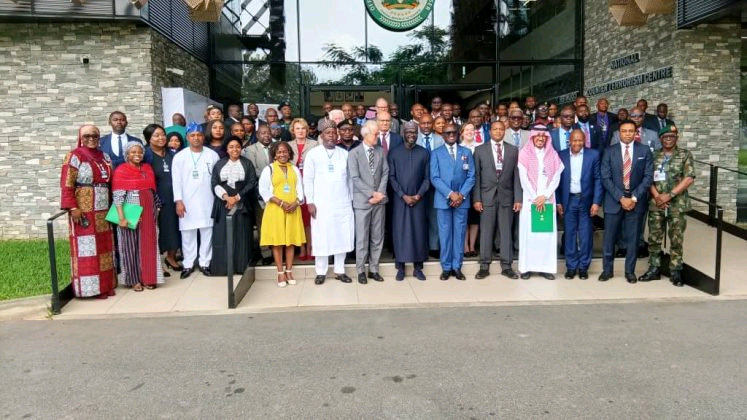
The National Security Adviser (NSA), Mallam Nuhu Ribadu, says Nigeria’s newly launched National Strategy for Combating Organised Crime 2027–2031 will boost the country’s response to increasingly linked criminal threats through better coordination, intelligence sharing and inter-agency collaboration.
Ribadu stated this at the launch held at the National Counter Terrorism Centre, NCTC, Office of the NSA in Abuja. He was represented by the National Coordinator of NCTC, Major General Adamu Garba Laka.
The NSA said organised crime in Nigeria has evolved beyond isolated acts and now involves interconnected networks spanning terrorism, drug trafficking, human trafficking, illicit financial flows, cybercrime, maritime crime and corruption.
“The complexity of these threats requires more than institutional strength. We need coherence, coordination and intelligence-driven collaboration across all sectors,” Ribadu stated.
He explained that the new strategy provides an integrated, evidence-based national framework built on a whole-of-government and whole-of-society approach. Key pillars include strengthened inter-agency cooperation and deeper collaboration with international partners.
Representing the UNODC Nigeria Country Office, Mr. Cheikh Touré said the scale of the problem made the strategy urgent.
Citing data from the National Bureau of Statistics, Touré noted that Nigerian households experienced 51.9 million criminal incidents in a single year. This included 2.24 million kidnapping cases, with an estimated ₦2.2 trillion paid in ransom.
“These are not just statistics. Families, traders, businesses and young people are bearing the cost of organised crime,” he said.
Touré added that the strategy will help end institutional fragmentation by giving agencies a shared intelligence picture and a common understanding of criminal networks that cut across mandates.
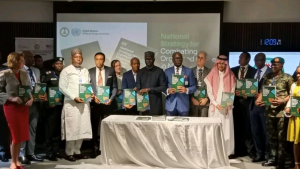
He said the document adapts the UNODC’s “prevent, pursue, protect and partner” framework to Nigeria’s security realities.
The Director of the U.S. Bureau of International Narcotics and Law Enforcement Affairs, Mr Tolliver Derrick, described the strategy as a major milestone in Nigeria-US law enforcement cooperation.
“Organised crime, cybercrime and terrorist financing now operate across borders. They require collective responses,” Derrick said.
He noted US support for initiatives under the strategy, including:
– The proposed Organised Crime Fusion Centre at NCTC
– Joint operational teams targeting priority criminal networks
– Enhanced financial intelligence for tracing and recovering criminal assets
Derrick also stressed deeper engagement with Interpol, ECOWAS, AFRIPOL and the Egmont Group to disrupt transnational networks.
“Every criminal network dismantled in Nigeria reduces threats beyond our borders. Stronger action against illicit financial flows will strengthen global security,” he added.
The US official commended Nigerian institutions for the strategy development process, saying it reflected national ownership and political resolve needed for sustainable partnerships.
The National Strategy for Combating Organised Crime 2027–2031 is designed to serve as a common framework for government institutions, security and justice agencies, civil society, development partners and international organisations.
Its goal is to dismantle organised criminal networks and strengthen Nigeria’s overall national security response.